Before Anyone Digs: How OHIO811 Works
What the colored flags in your yard mean, who calls for them and why private lines are your responsibility.
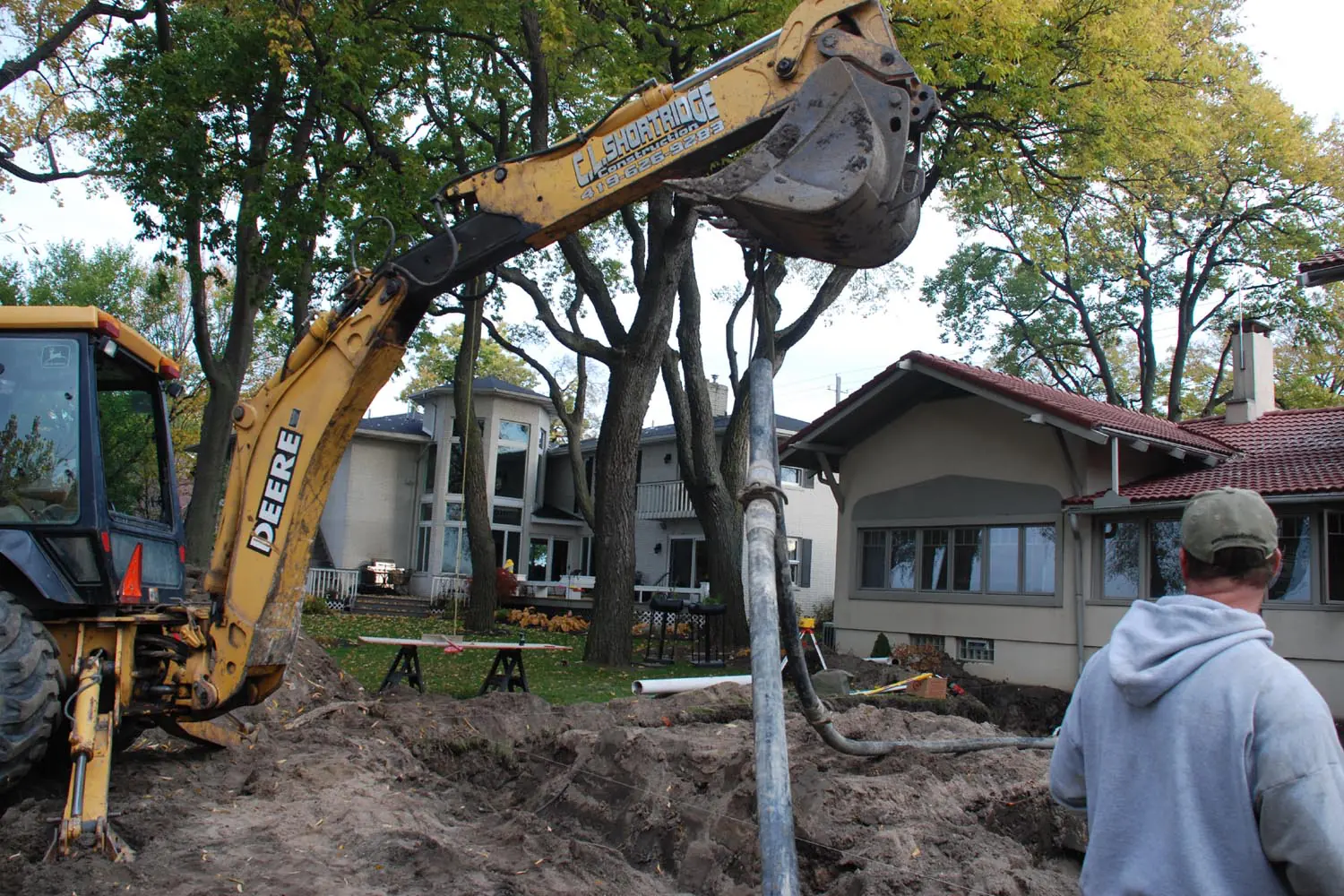
Before we dig, whether for a footer, a trench or a fence post, underground utilities have to be located. In Ohio, that runs through OHIO811, the state’s one-call utility notification center.
How it works
The excavator, which is us on our projects, submits a locate request with the dig location. Ohio law requires notice at least 48 hours ahead, not counting weekends and legal holidays, and no more than 10 working days before digging. OHIO811 notifies the member utilities, and each one sends a locator to mark its lines.
What the colors mean
- Red: electric power
- Yellow: gas, oil or steam
- Orange: communications, cable and fiber
- Blue: potable water
- Green: sewer and drain lines
- Purple: reclaimed water and irrigation
- White: the proposed excavation area
- Pink: temporary survey markings
The tolerance zone
Marks show the approximate location of a line, not its exact position or depth. Ohio defines a tolerance zone on either side of the marked line. Within it, excavation is done carefully by hand or with soft-dig methods until the line is exposed.
What does not get marked
Utilities mark their lines up to the meter or service point. Private lines beyond that usually are not marked. Think of the electric run to a detached garage, a propane line to a generator, a sewer lateral, irrigation, or a gas line to a grill. These need a private locator or good records. Tell your contractor about anything you know is buried on the property.
Why we are strict about it
Hitting a gas or electric line is dangerous, and even a cut fiber or water line can shut down a neighborhood and stall a project. A locate request costs nothing and takes a few days. We do not put a bucket in the ground without one.