Stamped Concrete vs. Pavers
Both can make a beautiful patio. Here is how they really differ on looks, upkeep and repairs.
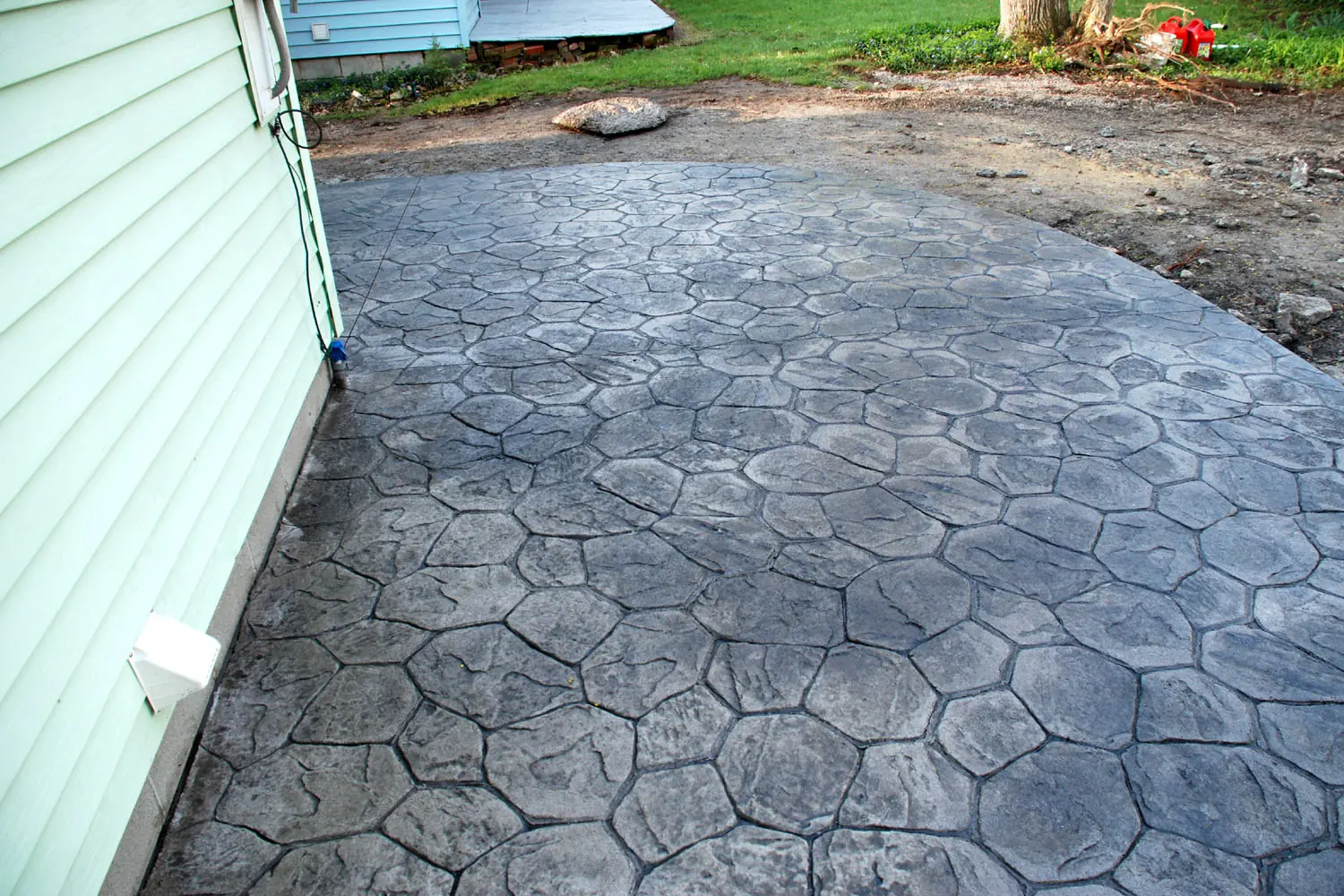
If you want a patio, walk or pool deck that looks like stone or brick, the choice usually comes down to stamped concrete or interlocking pavers. Both can look great. They age, perform and get repaired differently.
Stamped concrete
Stamped concrete is a single slab, colored and textured while it is still workable to mimic flagstone, slate, brick or wood. Because it is one piece:
- There are no joints between units for weeds or ants to work through.
- Individual pieces cannot sink, tip or shift.
- It installs as one pour, often in a single day once the base is ready.
The trade-offs: like all concrete, it can crack, and control joints are planned to keep that orderly. It needs resealing every two to three years to keep the color strong. A repair can be patched, but matching the color and texture perfectly is difficult.
Pavers
Pavers are individual units laid on a compacted base and bedding sand, with joint sand between them.
- Damaged units can be lifted out and replaced.
- The joints let the surface flex slightly with ground movement.
- Color runs through the unit, so wear shows less.
The trade-offs: individual pavers can settle or heave if the base is not right. Joint sand washes out and needs topping up, and weeds can take hold between units. Installed cost is often higher because of the labor involved.
What we tell people
If you want a continuous, low-fuss surface and are happy to reseal every few years, stamped concrete is hard to beat. If you expect to dig underneath someday or want to swap a damaged piece easily, pavers have the edge. Either way, the base preparation decides how well it holds up.