Why Concrete Cracks, and What Control Joints Do About It
Some cracking is normal. Here is why it happens, how joints control it and which cracks deserve a closer look.
There is an old saying in the trade: there are two kinds of concrete, the kind that has cracked and the kind that will. That is a little cynical, but it is rooted in physics. The goal is not to prevent every crack but to control where cracks go and keep them from mattering.
Why concrete cracks
- Shrinkage. Concrete shrinks as it dries and cures. A slab restrained by the ground beneath it pulls against itself, and if the stress has nowhere to go, it cracks.
- Temperature. Concrete expands and contracts with heat and cold, and Northern Ohio swings a long way between July and January.
- Settlement. Soft, wet or poorly compacted base material lets parts of the slab sink. This is the most avoidable cause.
- Overloading. A slab designed for cars will not hold up to loaded dump trucks.
- Freeze–thaw. Water that gets into concrete or under it expands when it freezes.
What control joints do
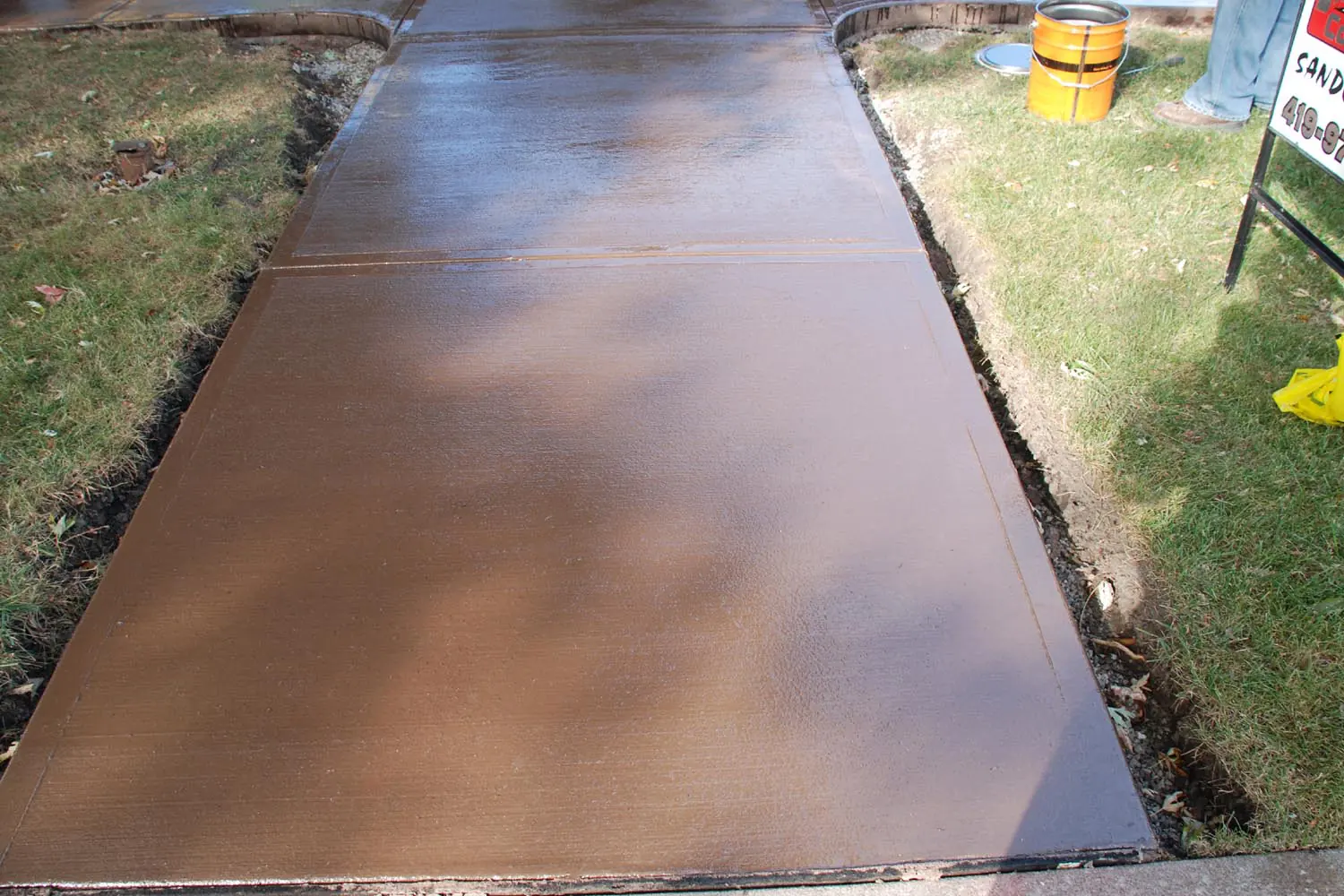
A control joint is a deliberately weakened line, either tooled into fresh concrete or saw-cut shortly after it sets. When shrinkage stress builds, the slab cracks along the joint, hidden at the bottom of the groove, instead of wandering across the middle of a panel.
Rules of thumb for joints:
- Space joints, in feet, about two to three times the slab thickness in inches. For a four-inch slab, that is 8 to 12 feet.
- Cut joints to about one-quarter of the slab’s depth.
- Keep panels close to square. Long, skinny panels crack across the middle.
- Saw-cut joints early, usually within hours of finishing, before random cracks start.
Which cracks to worry about
Hairline shrinkage cracks that stay tight are cosmetic. Look closer if a crack is wide (more than about an eighth of an inch), offset (one side higher than the other) or growing. Those usually point to base, drainage or load problems, and the fix starts underneath the slab.
How we minimize cracking
A compacted, well-drained base. The right mix with no extra water added on site. Joints laid out before the pour and cut on time. Proper curing. None of it is exotic, but skipping any of it shows up later.